For more information, Click Here
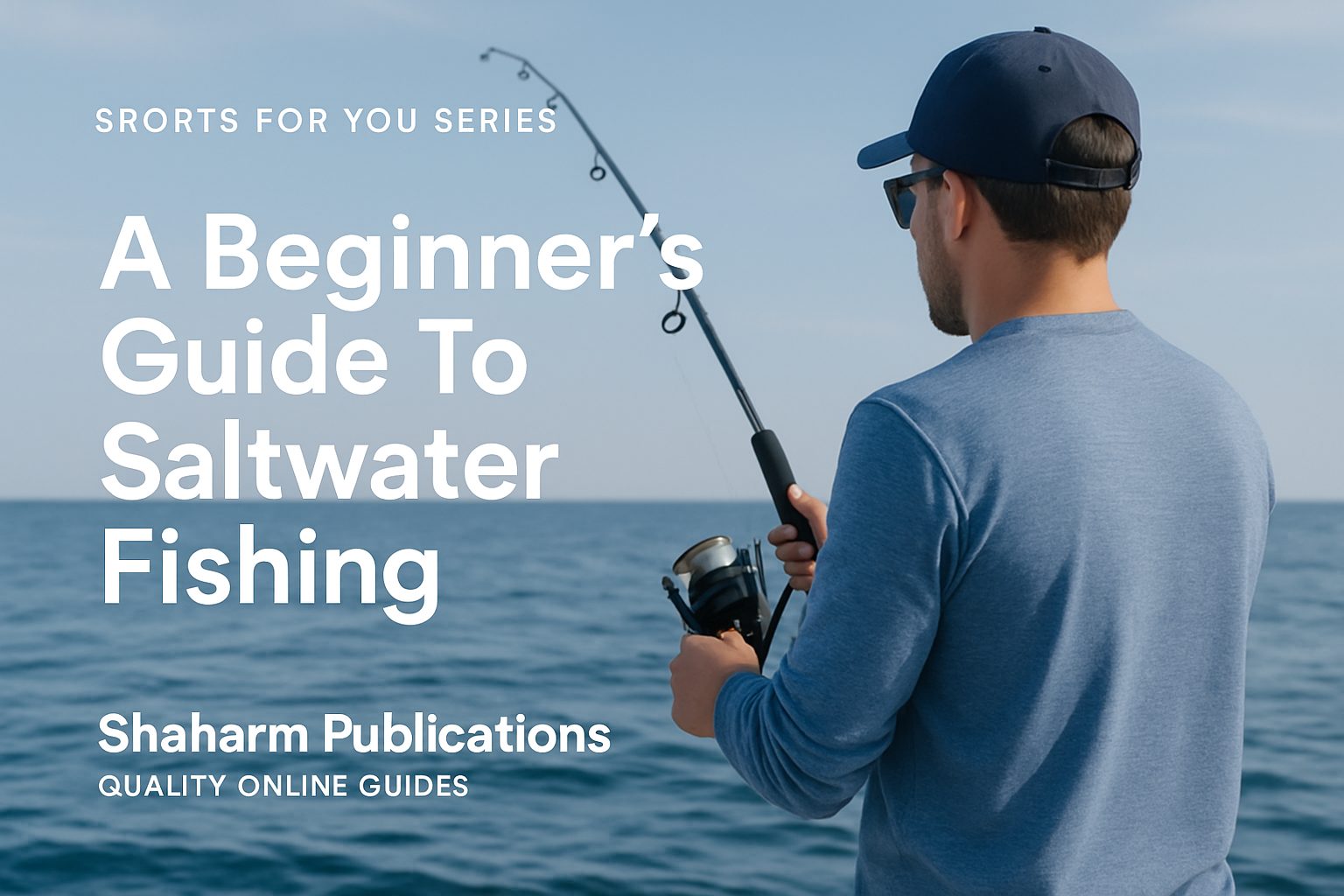
This guide provides essential information for those new to saltwater fishing. It covers basic techniques, necessary equipment, and safety considerations. The content is designed to help beginners understand fundamental concepts and practices. Readers will find straightforward advice to start their saltwater fishing journey.
Book Summary
Introduction to Saltwater Fishing
Saltwater fishing offers a sense of freedom and adventure, attracting enthusiasts with its vast waters and diverse species. While getting started can be challenging due to new equipment, techniques, and bait, the journey is rewarding. To accelerate learning, utilize multiple resources like clubs, charter trips, classes, and reading materials.
Learning Resources
Joining Saltwater Fishing Clubs
Clubs provide education, camaraderie, and access to experienced anglers. They often host meetings with educational segments and guest speakers, making them ideal for novices.
Charter Fishing Trips
Charter trips offer hands-on learning with professional captains who know local spots, baits, and techniques. Look for charters with an educational focus and check reviews online.
Fishing Classes
Local classes, available in coastal cities, provide structured learning either onshore or on water. Information can be found online, in newspapers, or at tackle shops.
Books, E-Books, Videos, and Magazines
Diverse media cover specific fish, techniques, and locations. Evaluate online videos for relevance, scope, and purpose to ensure they meet your learning needs.
Boat Shows and Fishing Seminars
These events showcase the latest gear and offer opportunities to learn from professionals and authors, often requiring a small entry fee.
Ethics on the Water
Conservation is critical due to overharvesting and habitat loss. Adhere to local regulations on size, catch limits, and seasons. Practice catch and release to protect species, handle fish carefully to avoid harm, and dispose of trash properly to prevent marine life damage.
Know Your Local Regulations
Regulations vary by state and species, covering seasons, bag limits, size requirements, and prohibited species. Stay informed to fish responsibly.
Releasing Small Fish
Minimize handling, remove hooks quickly, and revive exhausted fish before release to increase survival rates.
Tagged Fish
Record tag numbers, date, location, fish details, and condition. Report data to help scientific tracking efforts.
Practice Catch and Release
Handle fish with wet hands, avoid removing protective slime, and release quickly to reduce stress and injury.
Properly Dispose of Trash
Avoid ocean pollution to protect marine life from harmful materials.
Reporting Violations and Showing Respect
Report regulation breaches and show courtesy to other anglers to maintain a positive community reputation.
Saltwater Fishing Boats
Center Console Fishing Boats
Open design allows 360-degree fishing, suitable for rough seas. Available in sizes from 15 to 42 feet, with options for DIY kits.
Deck Boats
Versatile for fishing and leisure, with flat hulls and high seating capacity. Compare with bowriders based on intended use and water conditions.
The All-Purpose Fishing Boat
Ideal for both freshwater and saltwater, with deeper hulls and higher sides for stability and protection.
Choosing Rods and Reels
Select rods based on action level (ultra-light to heavy) tailored to target fish size and location. Pair with appropriate reels, considering gear ratios (e.g., 5.1:1 for balance of speed and power) and types (baitcasting vs. spinning).
Saltwater Fishing Gear and Equipment
Electronics on the Boat
Use GPS for navigation and fish finders with dual-frequency transducers for deep-water fishing. Ensure gear is saltwater-rated.
Fishing Line
Choose monofilament for versatility, braided for strength and distance, or fluorocarbon for invisibility. Match line test weight to target species.
Saltwater Fishing Tips
1. Learn The Knots
Master essential knots like the Bimini Twist for strength under stress.
2. Learn The Fish
Study species' habits, diets, and locations to improve targeting success.
3. Fishing Logs
Record details like time, moon phase, and bait to identify patterns over seasons.
4. Finding The Best Locations
Use maps, apps, and local knowledge to locate hotspots like reefs and inlets.
5. Hooks, Lures, And Bait
Select circle hooks to minimize harm, use shiny new lures, and maintain live bait properly.
Saltwater Fish Information
Covers species like Tarpon (jumping fighters), Blacktip Shark (energetic and clear-water dwellers), Tiger Shark (large and aggressive), Atlantic Sturgeon (East Coast, currently protected), and American Eel (bottom feeders). Details include identification, habits, diets, and bait preferences.
Saltwater Fishing and What It Takes
Success requires research, quality equipment, a suitable boat, and continuous learning. Prioritize fun and conservation to enjoy long-term engagement in the sport.
Review
Ank Sheckler's A Beginner's Guide To Saltwater Fishing is a comprehensive and thoughtfully structured introduction to the sport, offering a clear and practical roadmap for newcomers. The book excels in its organization, breaking down complex topics into digestible sections that build logically from foundational concepts to more advanced techniques. Sheckler’s writing is accessible without sacrificing depth, making it an ideal resource for those taking their first steps into saltwater angling.
One of the book’s strongest qualities is its emphasis on practical usefulness. From selecting rods and reels to understanding species-specific behaviors, the advice is grounded in real-world application. The sections on ethics and conservation are particularly commendable, underscoring the importance of sustainable practices—a dimension often overlooked in beginner guides. Compared to similar titles like A Beginner's Guide To Freshwater Fishing, this volume stands out for its targeted focus on saltwater environments, covering nuances like boat selection, saltwater-rated electronics, and species like tarpon and tiger sharks with precision.
Sheckler’s research is evident in the detailed gear recommendations and fishing tips, such as the importance of knot mastery and maintaining a fishing log. The inclusion of resources like clubs, charters, and seminars further enhances the book’s utility, positioning it as more than just a manual—it’s a gateway to the fishing community.
If there is one area for improvement, it would be the inclusion of more visual aids. While the text is thorough, diagrams of knots, rigs, or fish identification illustrations would elevate the learning experience for visual learners. That said, this is a minor point in an otherwise excellent guide.
For those interested in expanding their outdoor skills, the publisher offers related titles such as A Beginner's Guide To Bow Hunting and Let’s Go Fishing - Get Started with This Amazing Hobby!, which complement this book well. Additionally, readers looking to explore other practical hobbies might enjoy Beer Brewing For Beginners or Master Woodworking.
Overall, A Beginner's Guide To Saltwater Fishing is a reliable, engaging, and highly informative resource that demystifies the sport while inspiring respect for the marine environment. It is available for purchase on Amazon here.