For more information, Click Here
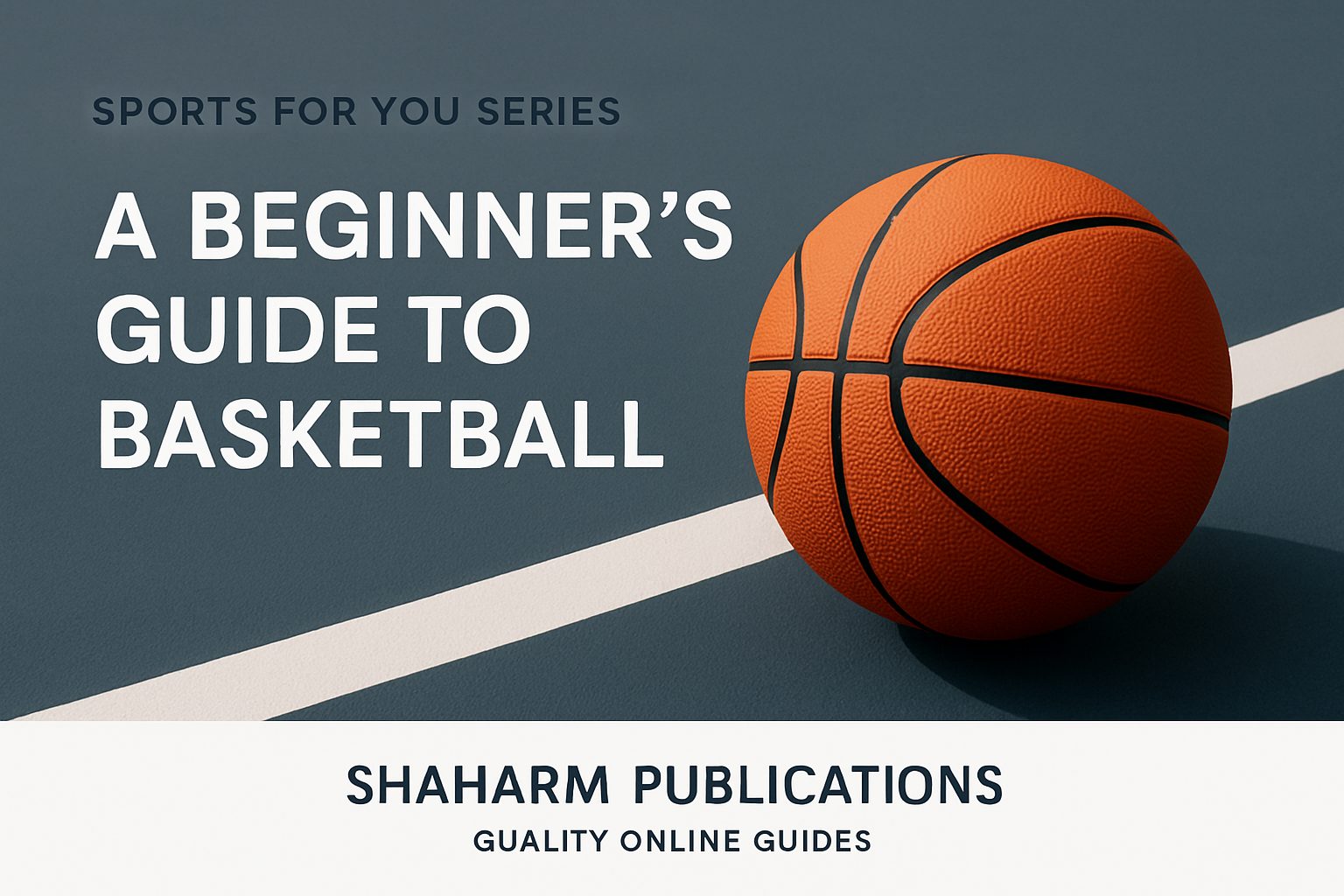
This guide provides an introduction to the sport of basketball for those new to the game. It covers the basic rules, essential skills, and fundamental strategies involved in playing. The content is designed to help readers understand how the game is played and what is required to get started. It serves as a straightforward resource for building a foundational knowledge of basketball.
Book Summary
Summary of "A Beginner's Guide to Basketball"
Introduction
A comprehensive guide designed to help beginners become well-rounded basketball players by covering shooting, passing, defense, rebounding, and more, with step-by-step instructions to shorten the learning curve.
The Object of the Game & Why It's Great
Basketball is accessible, requiring minimal equipment, and can be played solo or in teams. The objective is simple: score more points than the opponent. It's praised for its fast pace, inclusivity, and the blend of athleticism and strategy.
Clothing and Equipment
Basic needs include comfortable athletic wear, proper basketball shoes (with fitting tips), and optional gear like mouthguards. The basketball itself, backboard, rim, and net are essential, with details on sizes and materials for indoor/outdoor use.
The Rules
Covers court dimensions, player positions, game structure (quarters/halves), violations (traveling, double dribble), fouls, and key concepts like the shot clock and overtime. Emphasizes the importance of understanding rules for effective play.
Basketball Statistics
Stats like points, assists, turnovers, and rebounds are tracked to measure performance. The box score provides a comprehensive overview, helping players and coaches analyze and improve strategies.
How to Become a Good Shooter
Focuses on balance, using legs for power, proper hand placement, and follow-through. Includes tips for free throws and layups, emphasizing practice and confidence-building techniques.
Offensive Plays and Players
Describes the five positions (point guard, shooting guard, small forward, power forward, center) and offensive strategies like passing, screening, give-and-go, and pick-and-roll. Highlights the importance of spacing and movement.
Defensive Play
Defense requires effort, positioning, and anticipation. Covers man-to-man and zone defenses, boxing out, double-teaming, and pressure defense. Stresses that good defense leads to offensive opportunities.
How to Rebound
Rebounding is crucial for controlling the game. Techniques for offensive and defensive rebounding include boxing out, anticipating shot trajectories, and using quickness. Team effort is emphasized.
Player Moves
Specific moves for centers (e.g., drop step, hook shot), guards (crossover, driving), and forwards (screening actions) are detailed. Encourages practicing these to enhance in-game effectiveness.
Review
Ank Sheckler's A Beginner's Guide to Basketball is a remarkably well-structured and practical introduction to the sport, offering newcomers a clear and comprehensive pathway from basic understanding to foundational skills. The book excels in its methodical approach, breaking down complex elements like shooting mechanics, defensive positioning, and offensive strategies into digestible, step-by-step instructions that are easy to follow and implement. Unlike many introductory sports guides that can feel overwhelming or overly technical, Sheckler’s writing is accessible and engaging, making it an ideal resource for those entirely new to basketball.
One of the book’s standout qualities is its emphasis on practicality. From detailing the essential equipment—including thoughtful advice on selecting the right basketball shoes—to explaining rules and player positions with clarity, the author ensures readers are well-prepared both mentally and physically. The sections on shooting and rebounding are particularly strong, blending technical advice with confidence-building techniques that encourage practice and gradual improvement. Compared to similar works like Basketball - The Definitive Guide to the Game of Basketball, this guide is more focused on actionable steps rather than historical or advanced tactical depth, which makes it uniquely valuable for beginners.
While the book is thorough in covering fundamentals, it could benefit from slightly more visual aids, such as diagrams for plays or shooting form, to complement the textual descriptions. That said, this is a minor consideration in an otherwise excellent primer. Sheckler’s work is part of a broader collection of practical guides from the same publisher, including useful titles like A Beginner's Guide To Volleyball, A Beginner's Guide To Running, and A Beginner's Guide To Bowling, all of which maintain a similar commitment to clarity and usability.
Overall, A Beginner's Guide to Basketball is an insightful and highly useful resource that effectively shortens the learning curve for new players. It balances depth with readability and leaves the reader feeling equipped and motivated to step onto the court. The book is available for purchase on Amazon here.