For more information, Click Here
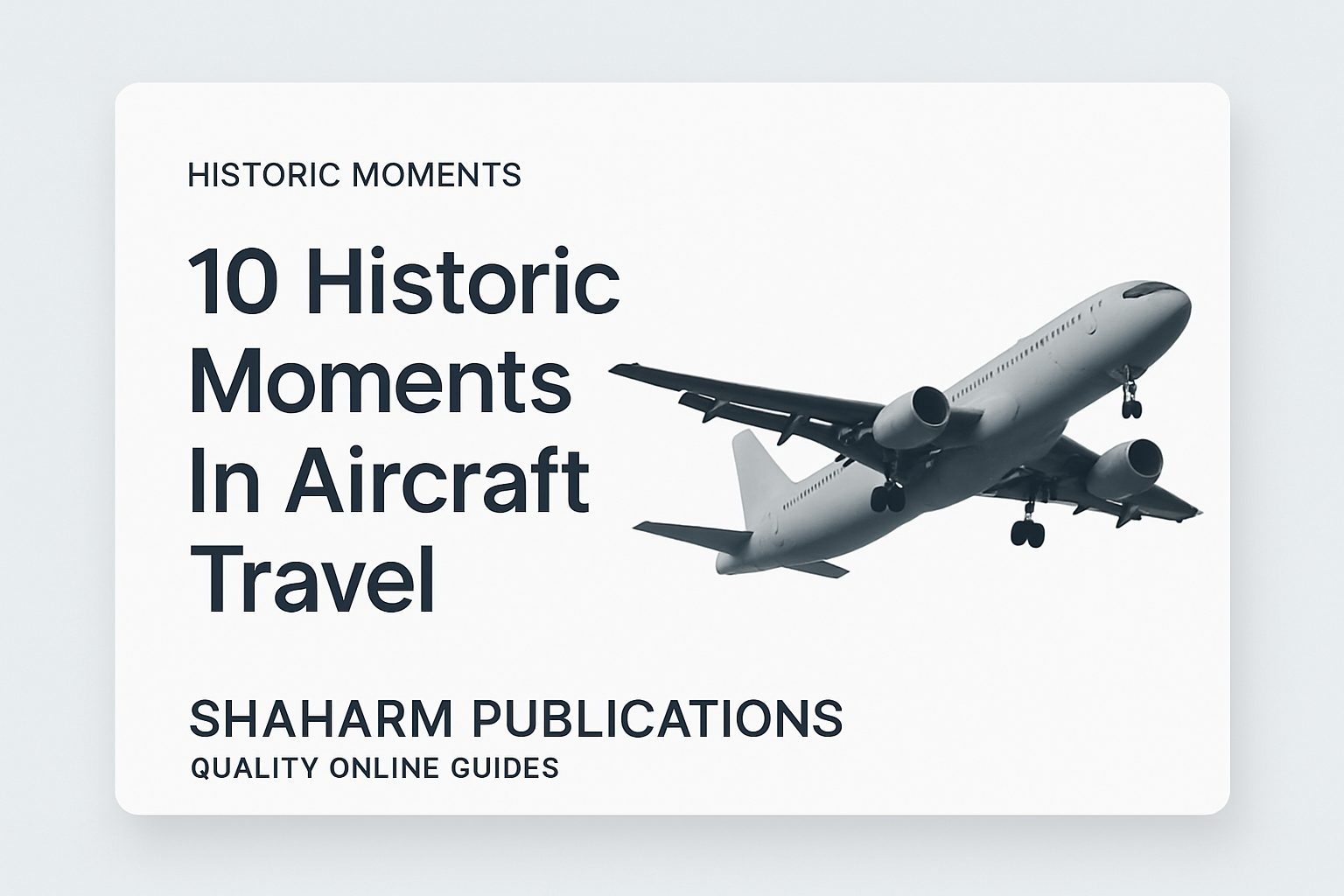
This book explores ten key events that have shaped the history of air travel. It covers technological breakthroughs and significant milestones in aviation. Each moment is presented with factual details and context. The content is based on thorough research and historical records. Readers will gain a clear understanding of how these events influenced modern flight. The narrative is straightforward and focused on the developments themselves.
Book Summary
Summary of Aviation Milestones
1. Introduction
Aviation evolved from ancient myths to reality in the 20th century, driven by pioneers like the Wright Brothers and technological progress, making air travel a global commodity.
2. The Montgolfier Brothers
Inventors of the hot air balloon in 1783; conducted first manned flights, advancing early aeronautics despite risks and tragedies.
3. The Wright Brothers
First successful powered flight in 1903; overcame skepticism, secured contracts, and laid foundations for modern aviation.
4. The First Zeppelin
Count Ferdinand von Zeppelin developed rigid airships starting in 1900; faced financial and technical challenges but achieved milestones in airship travel.
5. The St. Petersburg-Tampa Airboat Line
First airline service in 1914; short-lived but visionary, demonstrating potential for commercial air travel over water.
6. The First Flight around the World
U.S. Army Air Service team circumnavigated the globe in 1924, overcoming obstacles and showcasing aviation's global reach.
7. Charles Lindbergh
First solo transatlantic flight in 1927; became a global hero and advocate for aviation advancement.
8. Breaking the Sound Barrier
Chuck Yeager achieved supersonic flight in 1947 with the Bell X-1, marking a major leap in aviation technology.
9. The First Jetliner
De Havilland Comet introduced jet travel in 1952; faced early setbacks but paved the way for modern jetliners.
10. Yuri Gagarin
First human in space in 1961; a landmark in the space race, demonstrating human capability beyond Earth's atmosphere.
11. Concorde
Supersonic passenger airliner operational from 1976 to 2003; symbol of advanced engineering though not commercially sustainable.
Review
Oliver Crompt's 10 Historic Moments In Aircraft Travel is a meticulously researched and engagingly written account that captures the pivotal developments in aviation history. The book excels in its clarity and structure, presenting complex technological and historical milestones in an accessible manner without oversimplifying the subject matter. Each chapter is well-organized, providing sufficient context to appreciate the significance of events like the Wright Brothers' first flight or the introduction of the De Havilland Comet, while maintaining a narrative flow that keeps the reader engaged.
One of the book's strongest attributes is its depth of research. Crompt draws from a wide array of primary and secondary sources, offering insights that go beyond the well-trodden anecdotes often found in similar works. For instance, his treatment of the St. Petersburg-Tampa Airboat Line not only highlights its role as the first airline service but also delves into the economic and visionary challenges of early commercial aviation. This thoroughness is consistent throughout, making the book both informative and trustworthy.
In comparison to other works in the genre, such as those focusing solely on technological specs or biographical accounts of aviators, 10 Historic Moments In Aircraft Travel stands out for its balanced approach, weaving human stories with technical achievements. It avoids the dry, encyclopedic tone that can plague historical surveys, instead offering a readable and compelling chronology that appeals to both aviation enthusiasts and general readers.
If there is one area where the book could be enhanced, it would be in the inclusion of more visual elements, such as maps or diagrams, to complement the textual descriptions of aircraft and routes. While the prose is vivid, visual aids could further illuminate certain technical aspects, such as the design innovations of the Bell X-1 or the operational range of early zeppelins. That said, this is a minor point and does not detract from the overall quality and usefulness of the book.
For readers interested in related historical surveys, the publisher offers other titles like 10 Historic Moments Of Technology, 10 Historic Moments Of Computers, and 10 Historic Moments Of The Internet, which follow a similar accessible yet informative format.
Overall, 10 Historic Moments In Aircraft Travel is a valuable addition to the literature on aviation history, combining scholarly rigor with engaging storytelling. It is highly recommended for anyone looking to understand the key developments that have shaped modern air travel. The book is available for purchase on Amazon here.