For more information, Click Here
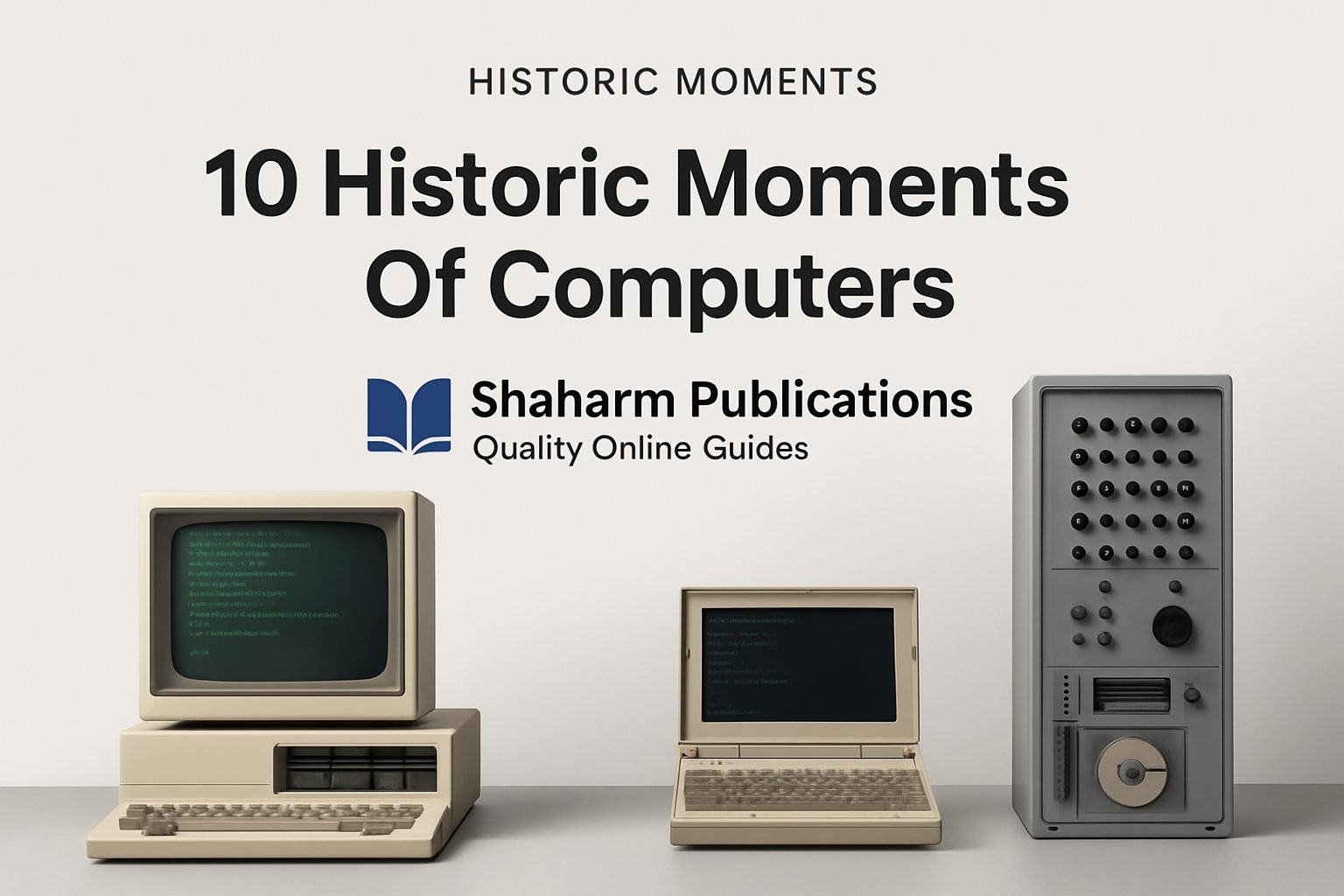
This book explores ten pivotal events in the history of computing that have shaped modern technology. It provides a chronological overview of key developments from early mechanical devices to contemporary digital systems. The content is based on well-documented historical facts and technological milestones. Readers will gain insight into how these moments influenced subsequent innovations and societal changes. The material is presented in an accessible manner suitable for a general audience.
Book Summary
Summary of Key Computer History Milestones
1. Charles Babbage's Difference Engine
Babbage's early 19th-century mechanical computer, funded by the British government, laid the groundwork for computational logic and programming concepts despite budget overruns and eventual cancellation.
2. Hewlett-Packard (1939)
Founded in a garage, HP started with affordable, innovative hardware like the 200A Audio Oscillator, setting a precedent for consumer-focused technology and business practices in computing.
3. ENIAC (1945)
The first electronic computer, developed for ballistics calculations during WWII, occupied 2,000 sq ft and used vacuum tubes. It established the foundation for digital computing architecture.
4. SAGE (1950s)
A Cold War-era military network for air defense, it introduced concepts like real-time data processing and geographical information systems, influencing later tech like GPS and broadcast systems.
5. IBM System/360 (1964)
A family of compatible mainframe computers offering scalable performance and storage, popularizing business computing and establishing IBM's dominance in the hardware market.
6. Apple I & II (1976–1977)
Steve Wozniak and Steve Jobs pioneered user-friendly, pre-assembled personal computers with color graphics and built-in features, making computing accessible to households and education.
7. IBM PC (1981)
IBM's personal computer standardized the term "PC," used an open architecture encouraging third-party hardware/software, and brought computing into mainstream homes and businesses.
8. Compact Disc (1985)
CDs revolutionized data storage with 700 MB capacity, enabling efficient software distribution, multimedia applications, and paving the way for DVDs and digital media ecosystems.
9. The Internet (1980s–1990s)
Evolving from government projects to public access via ISPs, the internet transformed communication, commerce, and media, becoming integral to daily life and global connectivity.
10. Smartphones
Combining computing power, internet access, and apps, smartphones like iPhone and Android devices miniaturized and personalized computing, reshaping communication, work, and entertainment.
Review
Oliver Crompt's 10 Historic Moments Of Computers is a concise yet remarkably thorough exploration of the pivotal events that have shaped modern computing. The book excels in its clarity and accessibility, making complex technological milestones—from Babbage's Difference Engine to the rise of smartphones—understandable to readers without a technical background. Crompt’s depth of research is evident; each chapter is well-supported with historical context, key figures, and the broader implications of each development, ensuring the narrative is both informative and engaging.
What sets this book apart from similar works, such as broader histories of technology, is its focused, milestone-driven approach. While other books might overwhelm with excessive detail, Crompt’s structure—highlighting ten transformative moments—allows for a digestible and impactful reading experience. The prose is crisp and avoids jargon, striking a balance between educational and enjoyable. For those interested in related topics, the publisher offers other focused histories like 10 Historic Moments Of Apple Inc, 10 Historic Moments Of Technology, and 10 Historic Moments Of The Internet, which complement this book well for readers keen on diving deeper into specific areas.
If there is one minor critique, it would be that the book occasionally leans toward a Western-centric perspective, with less emphasis on computing developments in other regions, such as early Soviet computing or contributions from Japan in the microprocessor era. A slightly more global outlook could have enriched an otherwise comprehensive account. That said, this does not detract significantly from the book’s overall value.
In summary, 10 Historic Moments Of Computers is an insightful, well-written primer that successfully demystifies the evolution of computing. It is highly recommended for students, enthusiasts, and general readers looking to grasp how today’s digital world came to be. The book is available for purchase on Amazon here.