For more information, Click Here
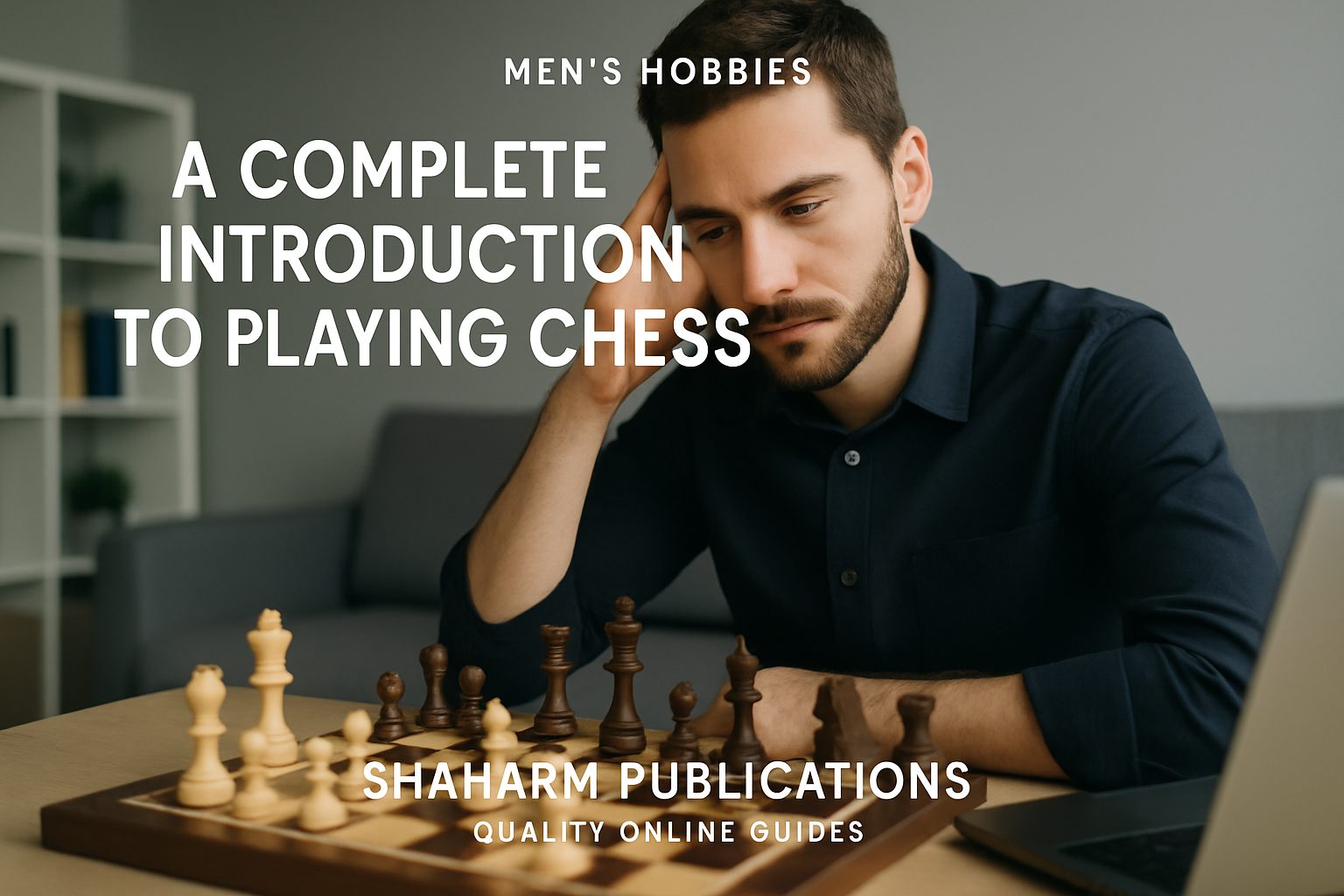
This guide provides a comprehensive overview of the game of chess, from the basic rules to more advanced strategies. It covers the movement of each piece, the objective of the game, and fundamental tactics for both opening and endgame play. The content is structured to help beginners build a solid foundation and gradually improve their skills. Readers will find clear explanations and practical advice to enhance their understanding and enjoyment of chess.
Book Summary
Summary of Chess Guide
Introduction
This guide provides a comprehensive introduction to chess for beginners, covering history, rules, strategies, and resources. It emphasizes learning piece movement, mindset, and competitive play.
History of Chess
Chess originated in India before the 6th century AD, evolving through Persia, the Arab world, and Europe. The Romantic Era emphasized style over winning. Modern competitive chess began in the 19th century with time regulations.
Buying a Chess Set
Beginners should opt for affordable, traditional sets to learn effectively. Research sellers, compare prices, and ensure board quality. Plastic sets with cardboard boards are recommended for practice.
Setup & Notation
The board has 64 alternating squares. Notation uses letters A-H and numbers 1-8. Pawns line up on the second and seventh rows; other pieces mirror each side. Queens start on their own color.
Piece Movement
Pawns move forward, capture diagonally. Rooks move horizontally/vertically. Bishops move diagonally. Knights move in L-shapes. Kings move one square. Queens move any direction. Castling is a special move under specific conditions.
Mindset
Stay calm, learn from losses, avoid arrogance or passivity. Use breaks to refresh. Good sportsmanship is essential.
Beginner Strategies
Control the center, develop pieces early, protect pawns, and study tactics. Use resources like books and online content.
Online Resources
Use forums, videos, and websites to learn. Be cautious of paid content; much is available for free. Play online to practice.
Clubs & Groups
Form or join chess clubs. Use fliers, websites, and clear rules. Include varied skill levels for learning opportunities.
Asking for Help
Seek mentors, use forums, and learn from professionals. Watching games and analyzing moves improves skills.
Learning from Losses
Analyze games, record moves, and maintain good sportsmanship. Losses provide valuable learning opportunities.
Thinking Ahead
Calculate moves, anticipate opponents, and practice memory exercises. Adapt strategies as needed.
Ending the Game
Aim for checkmate, recognize draw conditions, and use pieces strategically. Preserve key pieces for endgame advantages.
Rating Systems
ELO and Glicko systems track progress. Ratings help match players of similar skill levels and encourage improvement.
Chess Video Games
Video games offer tutorials, AI opponents, and variations. Research before purchase to ensure quality and compatibility.
Review
Andy Bowman's A Complete Introduction to Playing Chess is a remarkably well-structured and accessible guide for beginners, striking an ideal balance between foundational instruction and strategic depth. The book excels in its clarity, breaking down complex concepts like piece movement, notation, and basic tactics into digestible segments that avoid overwhelming the novice player. Bowman’s prose is straightforward and engaging, making the material approachable without sacrificing intellectual rigor.
One of the book’s standout qualities is its practical usefulness. It doesn’t just explain the rules; it contextualizes them within the broader framework of chess culture and mindset. Sections on maintaining composure, learning from losses, and cultivating good sportsmanship are thoughtfully integrated, offering holistic guidance beyond mere mechanics. The advice on selecting affordable chess sets and utilizing online resources is pragmatic and clearly informed by real-world experience, which adds to the book’s reliability.
Compared to other introductory chess books, such as those focused purely on openings or tactics, Bowman’s work distinguishes itself by emphasizing a well-rounded development of the player. It avoids the common pitfall of overloading readers with esoteric variations early on, instead prioritizing core principles that build confidence and competence. The historical overview, while concise, is sufficiently detailed to enrich the reader’s appreciation of the game without diverting from the instructional focus.
If there is a minor area for improvement, it would be the depth of coverage on intermediate strategies. While the book thoroughly prepares a beginner for club play and online matches, players looking to advance beyond the foundational stage might desire more elaborate discussions on positional play or advanced endgames. That said, this is a deliberate and understandable limitation given the book’s target audience, and it does not detract from the overall excellence of the work.
For those interested in similar practical guides from this publisher, I recommend exploring A Beginner's Guide To Basketball, Beer Brewing For Beginners, or Getting Started With Golf, all of which maintain the same commitment to clarity and usability.
In summary, A Complete Introduction to Playing Chess is an exemplary primer that successfully demystifies the game while inspiring a genuine enthusiasm for learning. It is available for purchase on Amazon here.