For more information, Click Here
This book explores the rise and fall of the Roman Empire, focusing on its political structures, military conquests, and cultural achievements. It examines how Rome evolved from a small city-state into a vast empire that dominated the ancient world. The narrative covers key events, influential leaders, and the factors that led to its eventual decline. Readers will gain insight into the daily life, innovations, and lasting legacy of Roman civilization.
Book Summary
Summary of the Roman Empire Introduction
The Roman Empire, spanning over 1000 years, was a dominant force across Western Europe, Eastern Europe, the Middle East, and Northern Africa by 44 BC. Known for its military prowess, political alliances, and advanced governance, it left a lasting legacy in law, architecture, and culture. Its origins are steeped in myth, such as the tales of Romulus and Remus and Aeneas, but historical evidence points to its foundation around 750 BC. The empire expanded rapidly, driven by both aggression and a desire for stability, and introduced innovations in engineering, law, and urban development, many of which influence modern society. Despite its eventual decline, the Roman Empire's impact on Western civilization remains profound, seen in legal systems, language, and architectural techniques.
Review
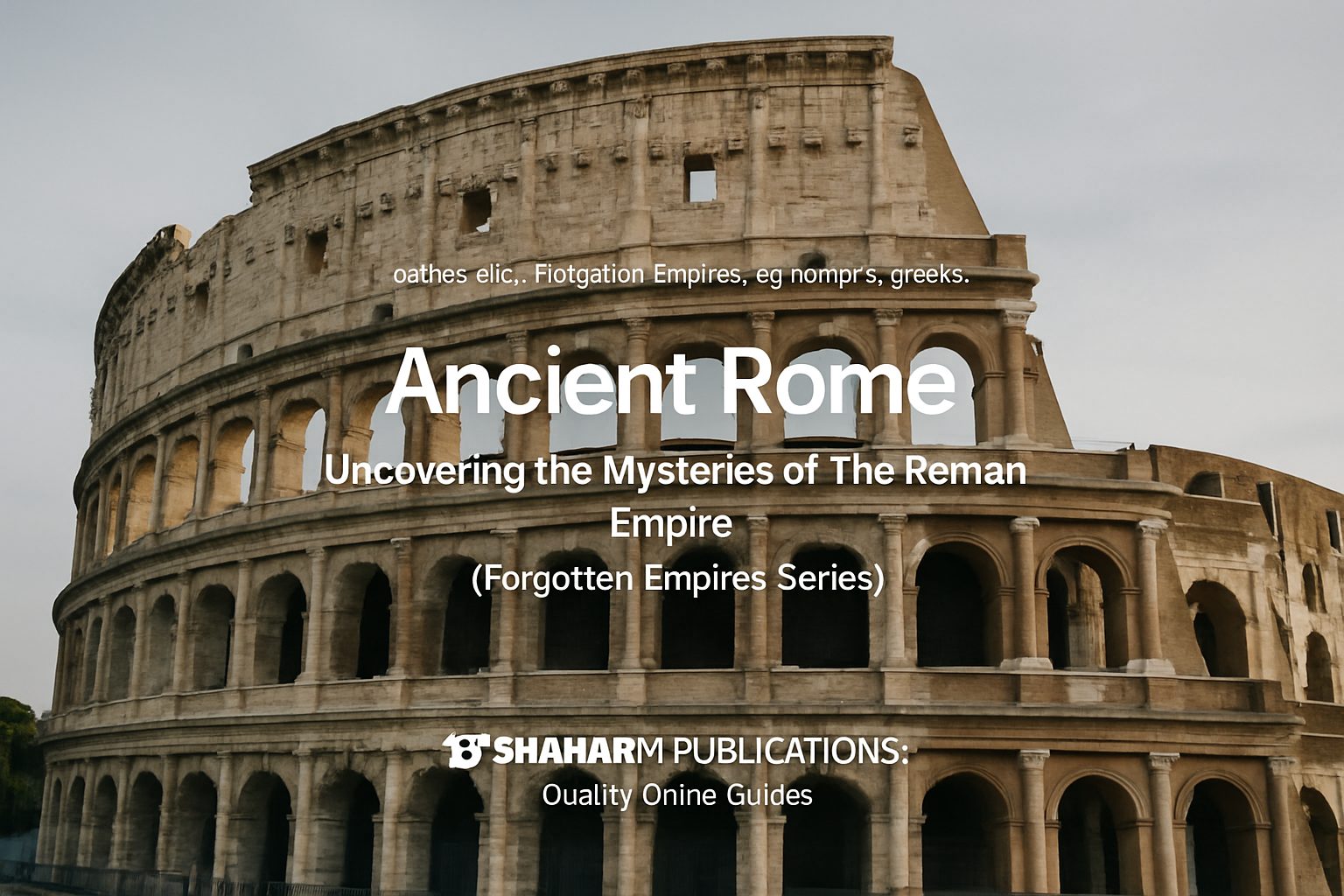
Peter Delagio's Ancient Rome - Uncovering the Mysteries of The Roman Empire is a compelling and well-researched exploration of one of history's most influential civilizations. The book excels in its clarity and accessibility, making a complex subject approachable for both newcomers and those with prior knowledge. Delagio’s prose is engaging and avoids academic jargon, ensuring the narrative flows smoothly while maintaining historical accuracy.
One of the book’s strongest qualities is its depth of research. Delagio draws from a wide range of primary and secondary sources, providing a balanced view of Rome’s political, military, and cultural evolution. The chapters on governance and engineering are particularly insightful, illustrating how Roman innovations continue to influence modern society. Unlike some broader surveys, this work delves into nuanced aspects of daily life and societal structure, offering readers a richer understanding beyond dates and events.
In comparison to similar works, such as Ancient Egypt - Uncovering the Mysteries of The Ancient Egyptians, Delagio’s book stands out for its focused narrative and ability to contextualize Rome’s legacy in a way that feels both educational and immediately relevant. The publisher has produced other notable works, like Ancient Greece - Uncovering the Mysteries of Ancient Greece and 10 Historic Moments Of Europe, which complement this volume for readers interested in broader historical themes. Additionally, those fascinated by pivotal events might appreciate 10 Historic Moments Of War or 10 Historic Moments Of World Change.
If there is a minor area for improvement, it would be the inclusion of more visual aids, such as maps or timelines, to better orient readers through Rome’s expansive timeline and geography. While the text is descriptive, supplemental graphics could enhance the learning experience, especially for visual learners.
Overall, Ancient Rome is a thoroughly enjoyable and informative read that successfully demystifies its subject. It is highly recommended for anyone seeking a nuanced yet accessible overview of the Roman Empire’s enduring impact. The book is available for purchase on Amazon here.