For more information, Click Here
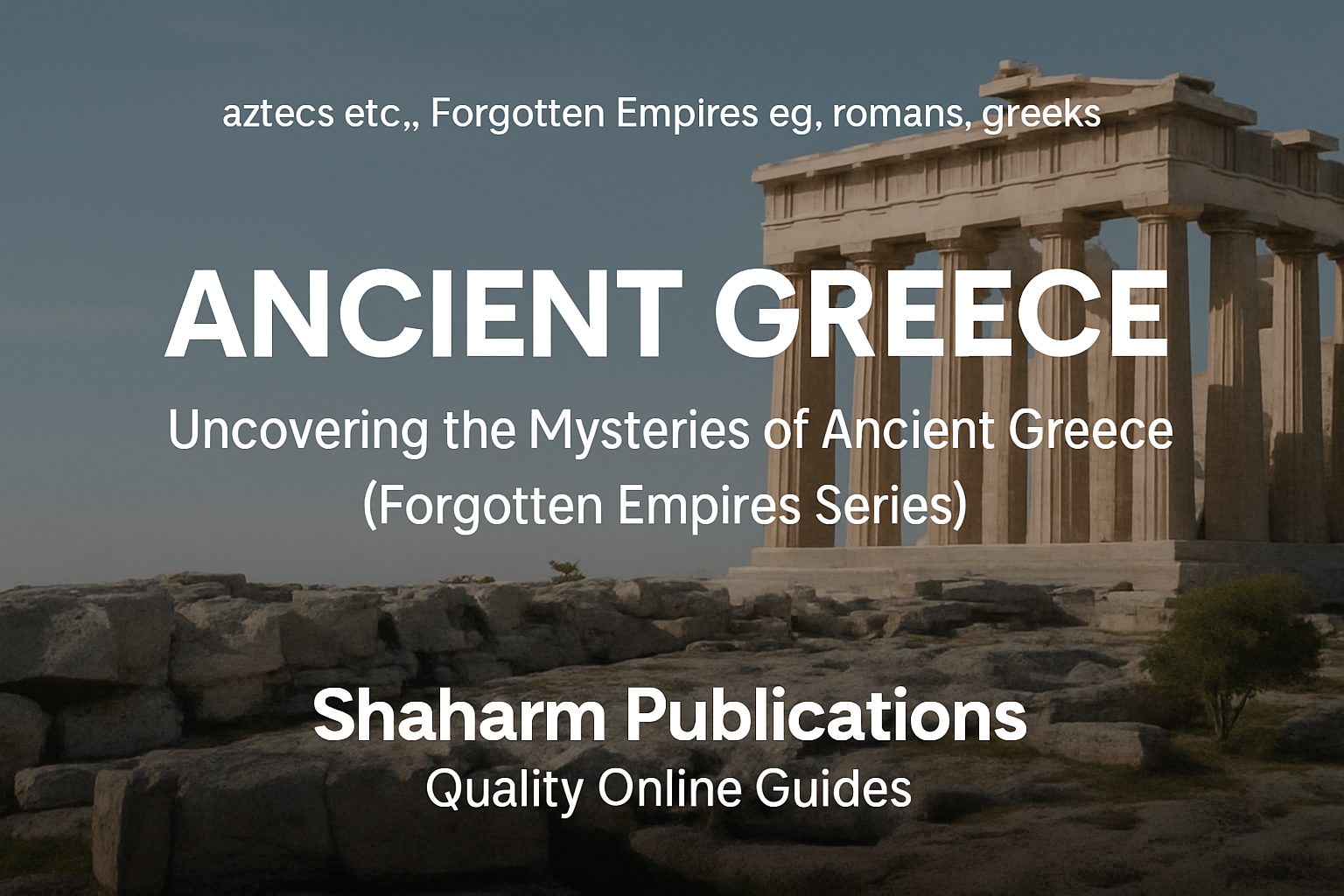
This book explores the history and culture of ancient Greece, focusing on its significant contributions to civilization. It covers topics such as politics, philosophy, and daily life during that era. The content is based on archaeological findings and historical research. It is part of a series that examines influential empires from the past.
Book Summary
Summary of "Ancient Greece"
Introduction
Ancient Greece, flourishing over 2,000 years ago, remains a cornerstone of Western civilization, influencing philosophy, art, and governance. Key figures like Homer, Plato, and Aristotle laid foundations still relevant today. The civilization's uniqueness stemmed from its geography, political structure of city-states like Athens and Sparta, and periods of cultural zenith, particularly the 4th and 5th centuries BCE.
Athens and Sparta
Athens pioneered democracy and was a hub for philosophy, arts, and governance, though participation was limited to adult male citizens. Its institutions included the ekklesia (assembly), boule (council), and dikasteria (courts). The Golden Age saw contributions from thinkers like Plato and historians like Thucydides.
Sparta contrasted as a militaristic oligarchy, emphasizing discipline and loyalty. Society was divided into Spartans (citizens), Helots (slaves), and Perioeci (craftsmen). Military training began early, and women had relative equality. Spartan society was legendary for its rigor and simplicity.
Other City-States and Conflicts
Other notable city-states included Corinth, Thebes, Argos, Delphi, and Rhodes, each with unique roles in trade, religion, or military. Major conflicts like the Persian Wars (e.g., Battles of Marathon and Salamis) and the Peloponnesian War between Athens and Sparta shaped Greek history, leading to shifts in power and eventual decline.
Culture and Legacy
Greek mythology, with gods like Zeus and heroes like Hercules, permeated daily life and influenced Western culture. Drama (tragedies by Aeschylus, Sophocles, Euripides; comedies by Aristophanes) and epic poetry (Homer's Iliad and Odyssey) were profound contributions. Philosophy saw Pre-Socratics, Socrates, Plato, and Aristotle exploring ethics, metaphysics, and logic.
Mathematics and science advanced with figures like Pythagoras and Euclid, while the legacy of Greece endured through Roman adoption, Renaissance rediscovery, and ongoing study in modern education.
Conclusion
Despite its flaws, including slavery and warfare, Ancient Greece's achievements in democracy, philosophy, art, and science continue to inspire, serving as a foundational pillar for Western thought and civilization.
Review
Peter Delagio's Ancient Greece is a compelling and well-researched exploration of one of history's most influential civilizations. The book excels in its clarity and accessibility, making complex topics like the political structures of Athens and Sparta, the nuances of Greek philosophy, and the impact of major conflicts such as the Persian Wars easily digestible for both newcomers and those with prior knowledge. Delagio’s prose is engaging without sacrificing depth, and his ability to weave together cultural, political, and historical threads creates a rich, holistic picture of ancient Greek society.
One of the book’s standout qualities is its balanced approach to presenting Athens and Sparta, highlighting the democratic innovations of the former and the disciplined, militaristic ethos of the latter without oversimplifying their complexities. The sections on Greek contributions to drama, philosophy, and science are particularly strong, offering insightful context that underscores their enduring legacy. Compared to other introductory works on the subject, such as those in the Ancient Rome volume from the same publisher, Delagio’s work distinguishes itself with its fluid narrative and attention to the human elements behind historical events.
If there is one area where the book could be enhanced, it would be in providing more detailed maps or visual aids to complement the textual descriptions of geography and battle strategies, which would further aid reader comprehension. That said, this is a minor point in an otherwise thoroughly informative and enjoyable read.
For readers interested in other historical deep dives, the publisher offers excellent companion works such as Ancient Egypt, 10 Historic Moments of Europe, and 10 Historic Moments of War, all of which maintain the same commitment to clarity and engagement.
Overall, Ancient Greece is a valuable addition to any history enthusiast’s library, offering both education and enjoyment in equal measure. It is available for purchase on Amazon here.