For more information, Click Here
This book provides a practical guide to mastering the art of argumentation. It outlines techniques for structuring your points effectively and responding to counterarguments. The content is based on principles of logic, psychology, and rhetoric. Readers will learn how to present their case clearly and persuasively. The methods are designed to be applicable in various personal and professional situations.
Book Summary
Summary of "The Art of Argument"
This book explores the art and strategy of effective argumentation, emphasizing persuasion, negotiation, and the use of facts and logic. It begins by framing argumentation as a vital skill for personal and professional success, highlighting the importance of winning arguments gracefully to avoid resentment.
Key Concepts:
- Abraham Lincoln’s Persuasion: Examines Lincoln’s use of facts and clarity, as in the "Almanac Trial," to dismantle opposing arguments logically.
- Socratic Method: Advocates strategic questioning to guide opponents to reconsider their positions, fostering introspection over aggression.
- Role of Facts: Discusses how facts alone may not persuade if they conflict with deeply held beliefs, citing psychological studies and historical examples like the O.J. Simpson trial.
- Validity of Arguments: Notes that many arguments are based on opinion rather than research, leading to irreconcilable differences, as illustrated by a church dispute case study.
- Fallacious Arguments: Details common weak arguments like Straw Man, Slippery Slope, Ad Hominem, and others, explaining how to identify and counter them.
Applications:
- Education and Employment: Shows how structured arguments aid in college admissions and job interviews by aligning with institutional or employer needs.
- Negotiation: Positions negotiation as a superior form of argument that seeks win-win outcomes, reducing resentment.
- Advertising: Analyzes how commercials use persuasion, testimonials, and demonstrations to influence consumer behavior.
Historical Examples:
- Features speeches by figures like Churchill, Elizabeth I, JFK, Patrick Henry, Martin Luther King Jr., Lincoln (Gettysburg Address), and Jesus (Sermon on the Mount), illustrating how powerful arguments shape history and societal values.
The book concludes by affirming that well-crafted arguments drive progress, inspire change, and are essential in both personal endeavors and global movements.
Review
Martha Rose's How To Argue And Always Win! is a compelling and thoroughly researched guide that stands out for its clarity and practical approach to argumentation. The book excels in breaking down complex rhetorical strategies into accessible, actionable advice, making it an invaluable resource for anyone looking to enhance their persuasive skills in both personal and professional contexts.
One of the book's strongest qualities is its depth of research. Rose draws from a rich array of historical and contemporary examples, such as Abraham Lincoln's use of factual precision in the "Almanac Trial" and the psychological nuances illustrated by the O.J. Simpson case. These examples are not merely decorative; they serve to ground her advice in real-world applications, demonstrating how logical structuring and empathetic engagement can dismantle opposition effectively. The sections on fallacious arguments—Straw Man, Slippery Slope, Ad Hominem—are particularly well-executed, offering clear definitions and practical counters that readers can immediately apply.
Compared to other works in the genre, such as those focusing on negotiation or debate techniques, How To Argue And Always Win! distinguishes itself through its emphasis on ethical persuasion and win-win outcomes. While many similar books prioritize aggressive tactics, Rose advocates for a more nuanced approach that seeks to reduce resentment and foster mutual understanding. This focus on negotiation as a form of argumentation is both refreshing and highly practical.
The readability of the book is another standout feature. Rose's prose is engaging and free of unnecessary jargon, making sophisticated concepts accessible to a broad audience. Each chapter builds logically on the previous one, guiding the reader from foundational principles to advanced strategies without ever feeling overwhelming. The inclusion of diverse applications—from education and employment to advertising—ensures that the content remains relevant across various contexts.
If there is one area where the book could be improved, it might be in providing more tailored exercises for readers to practice the techniques discussed. While the theoretical explanations are robust, additional structured activities could help readers internalize the strategies more effectively. That said, this is a minor point in an otherwise comprehensive guide.
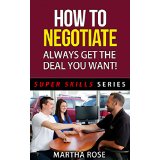
For those interested in further developing their skills, the publisher offers other valuable resources, such as How To Negotiate - Always Get The Deal You Want!, which complements the themes explored in Rose's work.
Overall, How To Argue And Always Win! is a thoughtful, well-crafted guide that empowers readers to argue persuasively and ethically. It is a worthwhile addition to any library focused on communication and personal development. The book is available for purchase on Amazon here.