For more information, Click Here
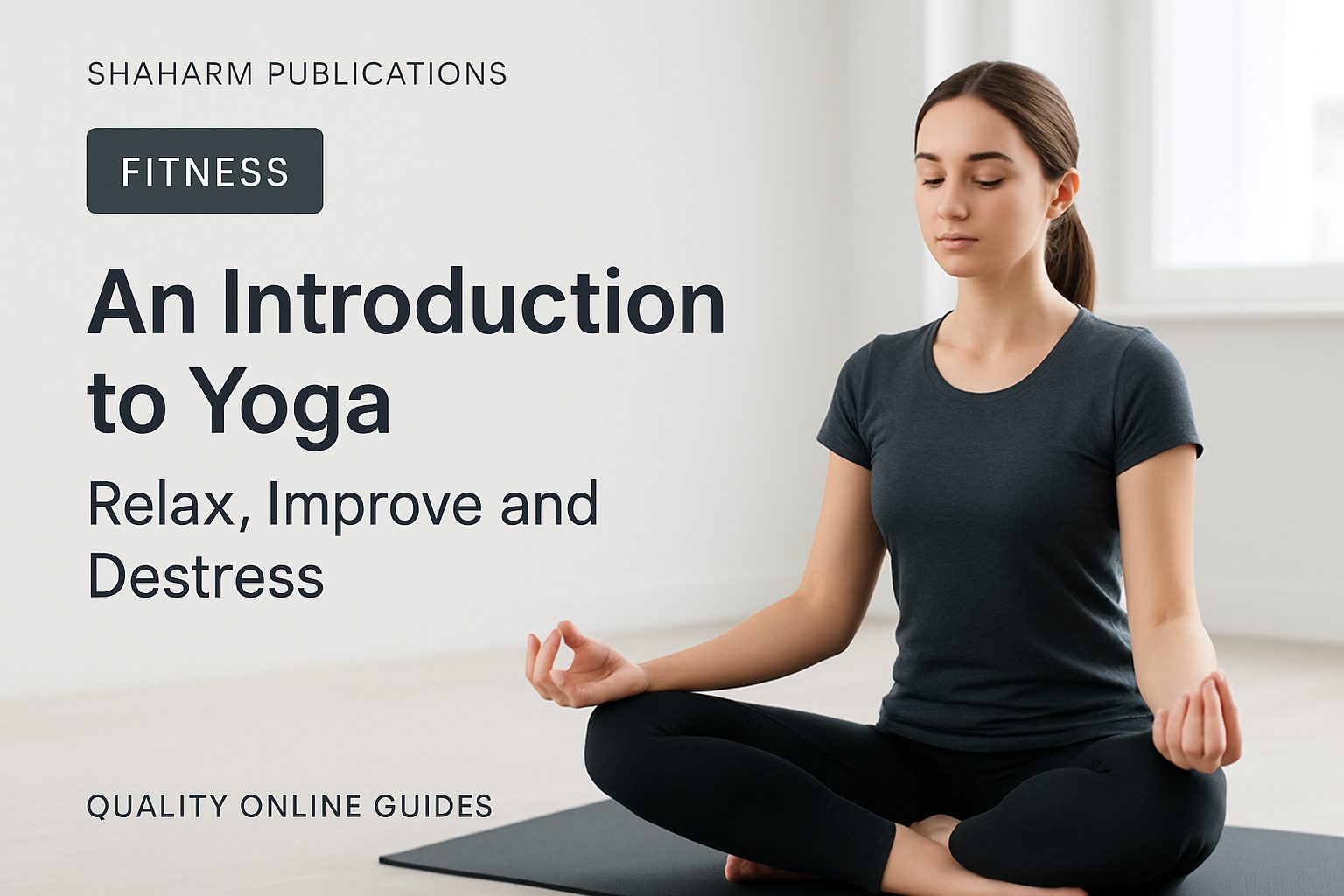
This book provides a guide to yoga for beginners. It covers basic poses and breathing techniques. The content focuses on relaxation and stress reduction. It also includes tips for improving flexibility and strength. The book is designed to be accessible for all fitness levels.
Book Summary
Introduction
Yoga is often perceived as inaccessible due to its terminology and perceived need for flexibility. However, it is for everyone, regardless of age, ability, or background. It promotes balance between body, mind, and spirit, offering transformative benefits when approached with an open mind.
What Is Yoga?
Originating from the Sanskrit word "yuj" meaning "union," yoga unites body, mind, and spirit. It is not just exercise but a philosophy for mental, physical, and spiritual harmony. It fosters calm, self-awareness, and connection with the world, providing tools to navigate life's challenges.
The Benefits of Yoga
Physical Benefits
- Improves flexibility, muscle tone, and joint health
- Enhances balance, coordination, and posture
- Boosts circulation, lung capacity, and energy levels
- Supports immune function, bone density, and digestion
- Helps manage blood pressure, cholesterol, and blood sugar
Mental & Emotional Benefits
- Reduces stress and anxiety
- Promotes mindfulness and present-moment awareness
- Enhances concentration, creativity, and self-confidence
- Fosters a sense of peace, joy, and interconnectedness
Origins and Core Concepts
Yoga originated in India around 2500 B.C., with foundational texts like the Yoga Sutras by Patañjali. Core concepts include the Five Sheaths of Existence (koshas) and the Eight Limbs of Yoga (yamas, niyamas, asana, pranayama, pratyahara, dharana, dhyana, samadhi), which guide ethical living, self-discipline, and spiritual growth.
Types of Yoga
Hatha: Foundation of physical postures and breathing.
Bikram/Hot Yoga: Practiced in heated rooms for detoxification.
Iyengar: Focus on alignment with props.
Kundalini: Aims to release spiritual energy.
Ashtanga: Fast-paced, series-based practice.
Restorative: Gentle, healing-focused with long holds.
Getting Started
Choosing a Class: Consider class size, instructor qualifications, convenience, and style alignment with goals.
Equipment: Comfortable clothing, yoga mat (PVC, rubber, cotton, or jute), and optional props like blocks, straps, and bolsters.
Scheduling: Aim for 3-5 sessions weekly, integrating yoga into daily routines for consistency.
Precautions
Consult a doctor before starting, especially with health conditions like injuries, hypertension, or pregnancy. Adapt postures as needed, and consider gentle variations like chair yoga for limited mobility.
Review
Jo Mayfore’s An Introduction to Yoga - Relax, Improve and Destress is a remarkably clear and practical guide for anyone looking to begin or deepen their understanding of yoga. The book excels in demystifying a practice that can often seem intimidating to newcomers, presenting yoga not as an esoteric discipline but as an accessible tool for holistic well-being.
One of the book’s strongest qualities is its readability. Mayfore writes with a warm, encouraging tone that immediately puts the reader at ease, while still conveying the depth and richness of yoga’s history and philosophy. The explanations of core concepts—such as the Eight Limbs of Yoga and the koshas—are concise yet thorough, offering enough context to appreciate yoga’s spiritual dimensions without overwhelming those who are primarily interested in the physical and mental benefits.
Where this book truly stands out is in its practical usefulness. Unlike many introductory texts that lean heavily on theory, Mayfore provides actionable guidance on getting started, from choosing a class and essential equipment to integrating yoga into a daily routine. The sections detailing the physical, mental, and emotional benefits are evidence-based and thoughtfully organized, making it easy for readers to understand how yoga can address specific needs like stress reduction, improved flexibility, or enhanced focus.
In comparison to other beginner-focused titles like Power Yoga - A Beginner’s Guide, Mayfore’s work distinguishes itself with its balanced approach, giving equal weight to yoga’s philosophical roots and its modern applications. This makes it not just a manual for exercise, but a genuine introduction to a lifestyle.
If there is one area where the book could be improved, it might be in the visual presentation. While the descriptions of poses are clear, the inclusion of more illustrative diagrams or photographs would have been helpful for readers who are visual learners. That said, this is a minor point in an otherwise comprehensive and well-executed guide.
Overall, An Introduction to Yoga is an excellent resource for beginners and a worthwhile read for those seeking to reconnect with the foundations of their practice. It’s informative, approachable, and genuinely useful—a book that delivers on its promise to help readers relax, improve, and destress.
The book is available to purchase on Amazon here: https://shaharmpublications.com/go/B00ML3V1KM