For more information, Click Here
This book offers practical techniques for improving personal finance quickly. It provides step-by-step guidance based on proven methods used by financial professionals. The content is structured to help readers implement changes efficiently. It covers essential topics such as budgeting, saving, and debt management. The approach is straightforward and designed for immediate application.
Book Summary
Summary of Personal Finance Guide
Introduction: The Need for Financial Education
Many lack foundational money management skills, leading to persistent financial insecurity. A shift in mindset is essential for achieving stability, as fear-based decisions often worsen financial health.
Assessing Your Financial Situation
Understanding net worth (assets minus liabilities) is key. Assets include property, investments, and valuables; liabilities encompass debts like mortgages and credit cards. Setting SMART financial goals (specific, measurable, attainable, realistic, time-bound) is crucial for planning.
Budgeting and Expense Management
Track income and categorize expenses into fixed (non-discretionary) and variable (discretionary). Allocate guilt-free spending money (5-35% of income) and adopt gradual habit changes. Use a trial period to refine your budget realistically.
Reducing Expenses and Embracing Frugality
Identify and cut discretionary spending by finding alternatives (e.g., brewing coffee at home). Frugality focuses on value-based spending, not deprivation—bargain hunting and conscious purchasing help maintain financial stability without sacrificing enjoyment.
Minimizing Possessions and Simplifying Life
Declutter to reduce emotional and financial costs of maintenance. Differentiate between needs and wants, and sell excess items for extra income. This process curbs impulse buying and reinforces mindful spending habits.
Increasing Income
Explore raises, job changes, side jobs, or businesses. Use extra income for goals, not lifestyle inflation. Selling unused items via garage sales, online platforms, or flea markets can provide additional funds.
Improving Credit and Reducing Debt
Monitor credit reports for inaccuracies and dispute errors. Pay down high-interest debt using methods like the snowball or avalanche approach. Avoid new credit, and consider consolidation or counseling if necessary. Use cash to limit overspending.
Saving and Investing
Build an emergency fund (3-6 months' expenses), save for large purchases, and invest for long-term goals like retirement. Start with mutual funds or brokerage accounts, understanding risks and diversifying to protect savings.
Gaining Support and Maintaining Changes
Involve family in goal-setting and find alternatives to maintain harmony. Lead by example to inspire others, and stay committed despite external skepticism. Financial improvement is a gradual process requiring persistence and support.
Review
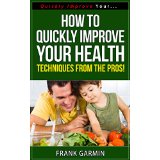
Frank Garmin's How To Quickly Improve Your Finance - Techniques From The Pros! is a standout guide in the crowded field of personal finance literature. Its greatest strength lies in its exceptional clarity and practical approach, making complex financial concepts accessible to readers at any level of expertise. Garmin structures the book logically, beginning with a thoughtful introduction on the necessity of financial education and the mindset shifts required for stability, then systematically guiding the reader through assessing their financial situation, budgeting, debt reduction, and investing.
The depth of research is evident in the nuanced advice provided, such as the emphasis on differentiating between needs and wants, the SMART goal framework, and actionable strategies like the snowball method for debt repayment. Unlike many finance books that can feel overly theoretical, this one excels in readability and offers tangible steps—such as allocating guilt-free spending or decluttering for extra income—that readers can implement immediately. It also thoughtfully addresses the psychological aspects of money management, encouraging gradual habit changes and family involvement, which adds a layer of sustainability to the advice.
Where some similar books, like The Budget Book - How to Budget Your Money and Your Life, focus heavily on tracking and planning, Garmin’s work distinguishes itself by blending tactical frugality with income-building strategies, creating a more holistic roadmap to financial health. That said, the book could be enhanced with more case studies or real-life examples to illustrate the techniques in practice, which would help reinforce the concepts for visual or experiential learners. Nonetheless, this is a minor point in an otherwise comprehensive and highly useful resource.
Readers who appreciate this straightforward, actionable style may also enjoy other titles from the same publisher, such as How to Master Debt and Overcome It, More Money For You - Creating a Financial Budget That Works!, and Living Debt Free – How to Pay off Every Debt You Have... Simply and Easily!.
Overall, How To Quickly Improve Your Finance is a valuable, no-nonsense manual that delivers on its promise to provide professional techniques for rapid financial improvement. It is available for purchase on Amazon here.